
Something genuinely unusual has turned up in this week's guidance. For the run of days from Sunday 22 to Wednesday 25 June, the storm models are forecasting the highest CAPE values we have on record over the UK - and, just as importantly, the short-range runs are holding that signal rather than quietly backing off.
Two ways to read this. New to weather? Part 1 explains everything from scratch - no jargon. Already a chaser or forecaster? Skip down to Part 2 - the record for the numbers, the model spread and the chase read.
Part 1 - What is CAPE, and why does this matter?
When forecasters talk about how "explosive" a day could be, the number they reach for is CAPE - Convective Available Potential Energy. The name is a mouthful, but the idea is simple.
Think of it as the fuel in the atmosphere's tank. On a warm, humid afternoon, a pocket of air near the ground is lighter than the air around it, so it starts to rise - like a hot-air balloon. CAPE measures how hard the atmosphere keeps pushing that air upward once it gets going. More CAPE means the air rises faster and further, and that is exactly what builds tall, violent thunderstorms with heavy rain, hail and lightning.
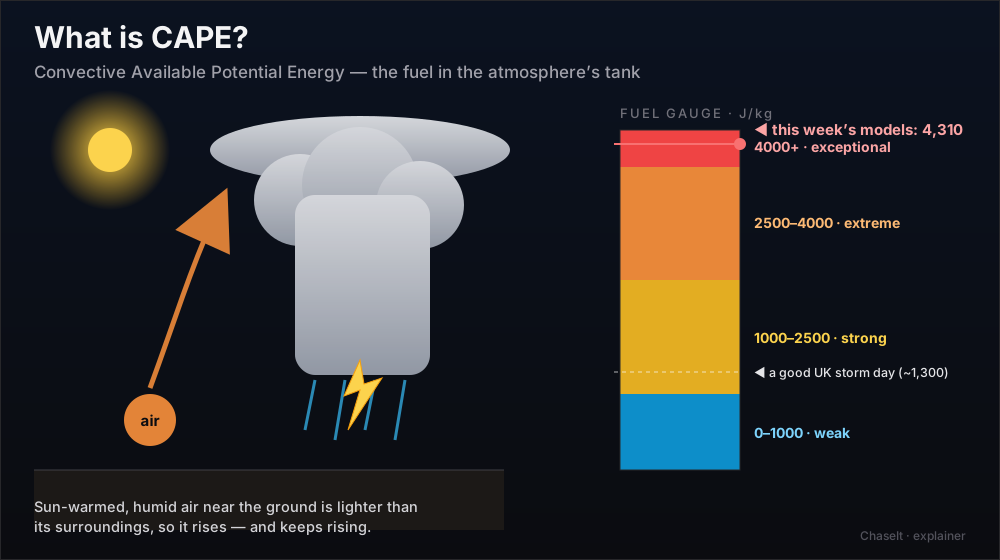
The numbers run on a rough scale, in units of joules per kilogram (J/kg):
- 0-1000 - weak. Little to no storm risk.
- 1000-2500 - strong. A good UK thunderstorm day usually sits around 1,000-1,500.
- 2500-4000 - extreme. Rare over Britain; more like the American Plains.
- 4000+ - exceptional. The models are showing 4,310 this week.
So in plain terms: the atmosphere over the UK this week is forecast to be carrying roughly three times the fuel of a normal storm day.
But fuel isn't the whole story
Here's the catch that separates a soaking thunderstorm from a dangerous, organised one: wind shear - how much the wind changes speed and direction as you go up. Shear is what lets a storm organise, rotate and last for hours instead of collapsing on itself.
- Lots of fuel, little shear = pulse storms: torrential downpours, big hail, frequent lightning and flash flooding - but short-lived and disorganised.
- Lots of fuel AND strong shear = supercells: organised, rotating, longest-lived - the worst severe-weather risk.
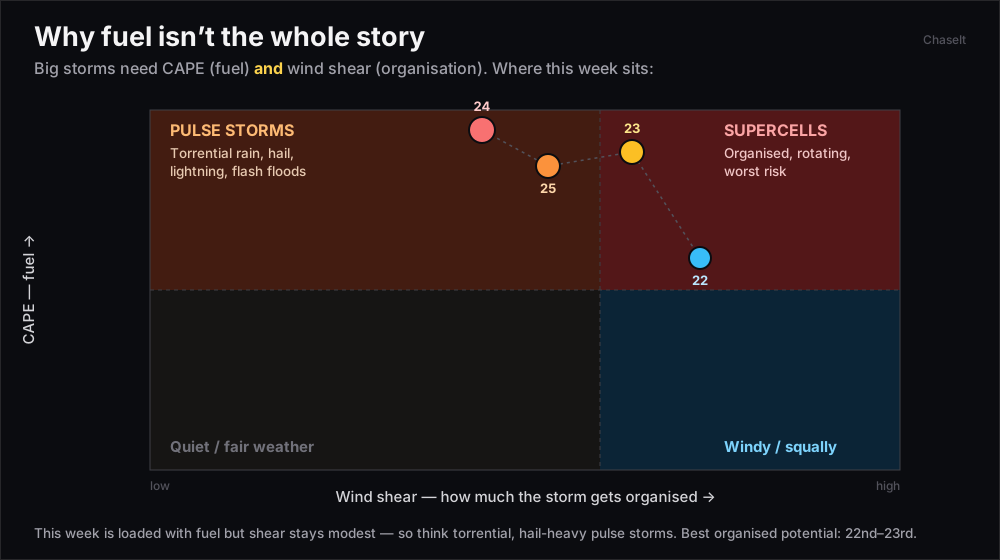
This week is loaded with fuel but the shear stays modest (more on the exact numbers below). That points to torrential, hail-heavy pulse storms and a real flash-flooding threat - rather than a classic supercell outbreak - with the best organised potential earlier in the window, on the 22nd-23rd.
Part 2 - The record
ChaseIt snapshots every major model (UKV, IFS, ICON, GFS-ENS) every six hours, so we can put today's forecast in context against everything we've stored since 1 May. Against that baseline, this setup is off the top of the chart.
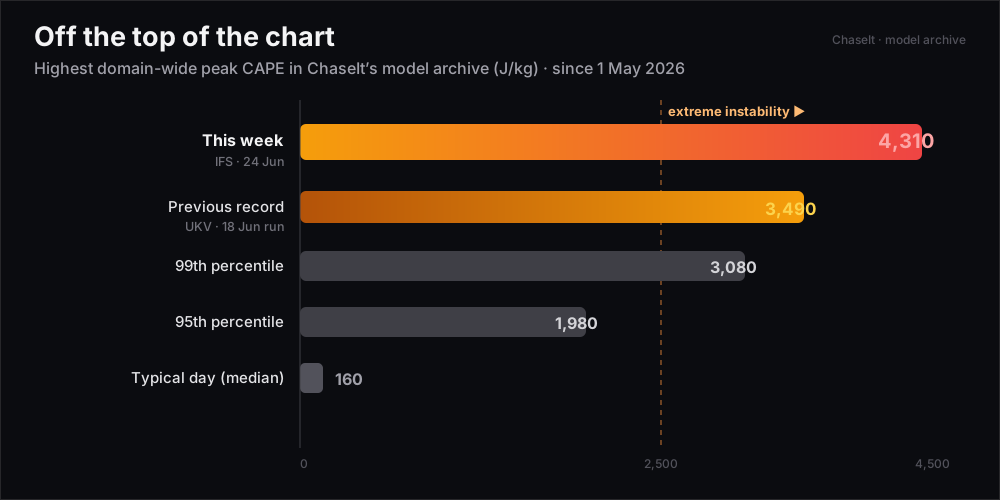
For scale: across the whole archive the median day peaks at just 160 J/kg, the 95th percentile is around 1,980, and the 99th percentile about 3,080. This week's peak - 4,310 J/kg (IFS, valid 24 June) - beats the previous record of 3,490 by roughly 820 J/kg, about 24%, and sits cleanly above the 99th percentile of everything on file. The number of model snapshots clearing 3,000 J/kg has gone from essentially zero through May to double figures on each of the last two days' runs.
Why we have confidence
This isn't one rogue run. For Tuesday 24th, the IFS has tracked 3,930 -> 3,540 -> 4,310 J/kg as the lead time has shortened, while the ICON has climbed from 1,230 to 3,620 and the UKV from 2,930 to 3,850. Independent models converging and strengthening as the event nears is the opposite of the usual long-range CAPE over-cook that fades on every cycle.
The setup, day by day
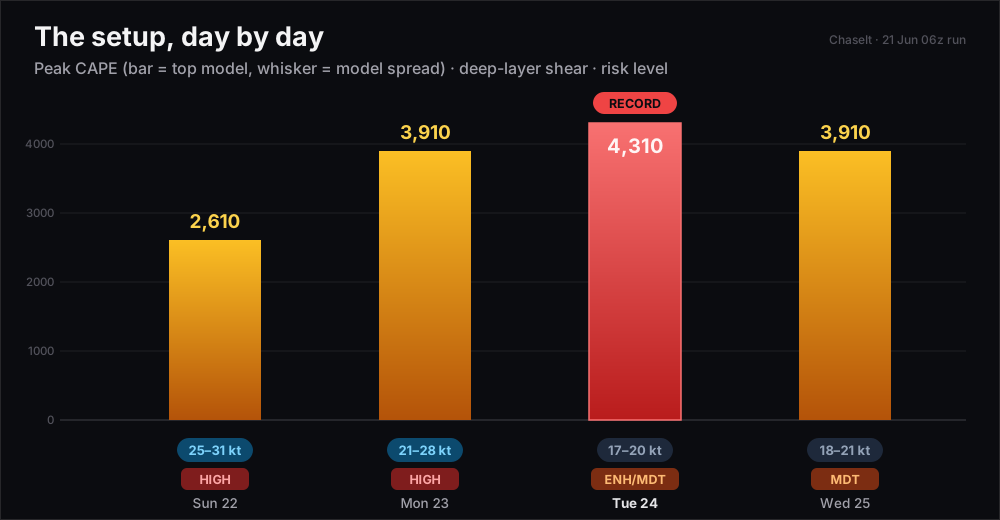
- Sun 22 - CAPE to ~2,600, the best shear of the window (25-31 kt): the most organised-storm potential.
- Mon 23 - CAPE 3,260-3,910 with 21-28 kt shear: still organised, high risk.
- Tue 24 - the raw-energy peak: IFS 4,310, UKV 3,850, ICON 3,620 - but shear drops to 17-20 kt. Pulse storms, torrential rain, large hail, flash flooding.
- Wed 25 - instability lingers (2,710-3,910) before the airmass modifies.
Chase read
- 22-23 Jun - best overlap of instability and shear. Watch for organised cells, large hail and a small chance of rotation.
- 24 Jun - the energy peak. Expect explosive, high-rain-rate storms and prolific lightning; flash flooding the headline hazard.
- 25 Jun - strong instability lingers before things settle.
One important caveat. These are model-forecast CAPE values at one to three days' lead, not observed soundings - and models tend to run hot on CAPE in deep, moist plumes, so the exact magnitude will shift run to run. But as a statement of how loaded this airmass is, it is genuinely off the top of our chart. We'll update as the short-range guidance and the Met Office picture firm up.
Discussion · 0
Sign in to commentNo comments yet — be the first.
Members can post. Sign in to join the discussion.