

Update, 25 August 2026: the picture has moved fast since this was written — Niño‑3.4 hit +1.4°C in July, NOAA now puts a very strong event above 90%, and there's a 69% chance of a historic peak. Read the August check‑in.
The Pacific is talking. As of NOAA's 11 June ENSO Diagnostic Discussion, an El Niño Advisory is in effect, and the major modelling centres are in rare agreement: this event is real, it's strengthening, and there's a genuine chance it ends the year as one of the strongest on record.
Here's where it stands today, and where it's headed.
What's observed now
El Niño is currently borderline. The latest weekly Niño‑3.4 index — the benchmark patch of equatorial Pacific between 170°W and 120°W — sits around +0.7°C (NOAA, 11 June), having read +0.9°C in IRI's May update. That's only just over the +0.5°C El Niño line. In other words, the surface hasn't gone extreme yet.
What's loaded beneath
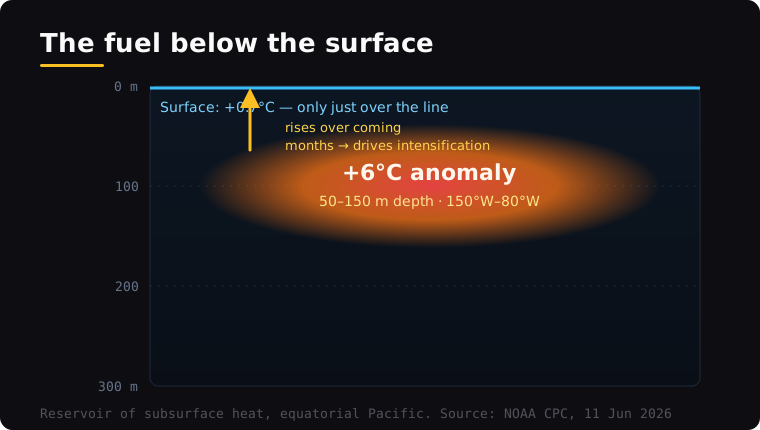
The reason forecasters are confident is below the waterline. NOAA reports that between roughly 150°W and 80°W, subsurface temperatures at 50–150 m depth are running up to +6°C above normal — a large pulse of warm water moving east across the Pacific. That subsurface heat is the fuel; as it surfaces over the coming months, it drives the event's intensification.
Where it's going
The headline numbers from the official centres:
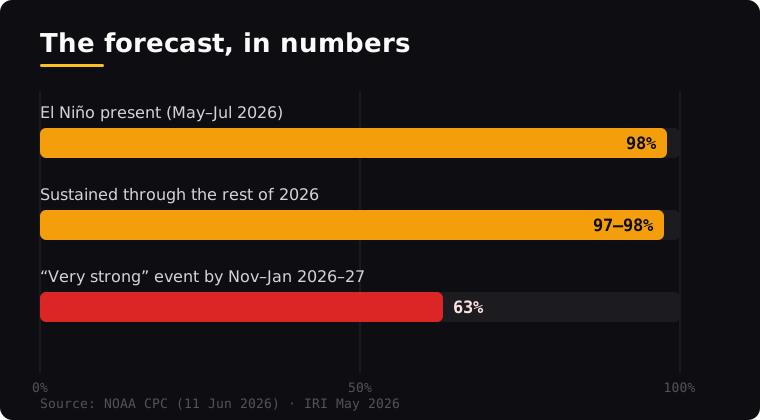
- 98% chance of El Niño through May–July 2026, holding in a 97–98% band for the rest of the year.
- 63% chance of a "very strong" El Niño during November–January — which, if realised, would rank among the largest events since 1950.
- A "super" event is formally defined as Niño‑3.4 exceeding +2.0°C. Several model ensembles (ECMWF, NOAA CFSv2, BOM, NMME) push past that mark for the winter peak, and the rate of warming is currently outpacing the lead‑ins to both the 1997‑98 and 2015‑16 super events.
The honest caveats
Long‑range seasonal forecasts carry real uncertainty, and peak intensity isn't expected until late autumn / winter 2026‑27 — months away. The most dramatic "record‑breaking / off‑the‑charts" framing comes largely from a single outlet (Severe Weather Europe); the official centres are confident but more measured. Treat +3°C and "biggest ever" headlines as the optimistic tail, not the central forecast.
This is global context, not a UK convective‑season forecast — none of it comes from our own sensors.
What it means for chasers
ENSO is a Pacific phenomenon, and its influence on UK and northwest‑European weather is weak and indirect. Its clearest, most reliable impacts land elsewhere: a wetter, stormier US Gulf and Southwest, a generally quieter Atlantic hurricane season, drought risk across Indonesia and Australia, and a measurable bump to global average temperature in 2027.
We'll be tracking the monthly plume updates through the autumn — and if a credible UK signal emerges, you'll read it here first.
Sources: [NOAA Climate Prediction Center ENSO Diagnostic Discussion](https://www.cpc.ncep.noaa.gov/products/analysis_monitoring/enso_advisory/ensodisc.shtml) (11 June 2026); [IRI ENSO forecast](https://iri.columbia.edu/our-expertise/climate/forecasts/enso/current/) (May 2026). Figures current as of 13 June 2026.
Discussion · 0
Sign in to commentNo comments yet — be the first.
Members can post. Sign in to join the discussion.